
Turn Google Searches Into Better Business Opportunities.
Google Ads can put your business in front of people actively searching for the services or products you offer. But getting clicks is only one part of the equation.
RankerMatics helps businesses plan, manage, and improve Google Ads campaigns with a focus on relevant search intent, thoughtful targeting, measurable conversions, and a landing-page experience designed to make the next step clear.
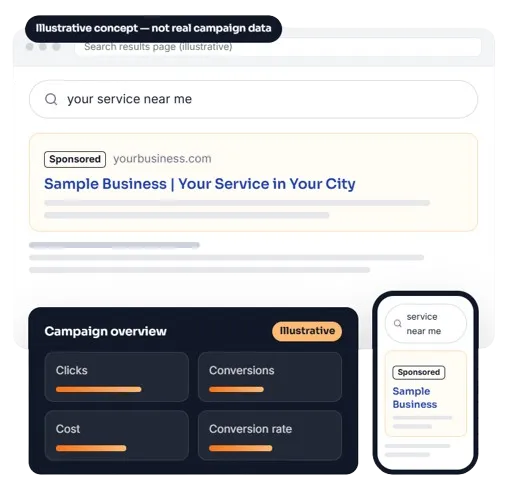
Campaigns Built Around Business Goals
Relevant Search Intent
Conversion Tracking Considered From the Start
Transparent Performance Reporting
Your Ad Budget Should Have a Clear Job to Do.
Running Google Ads is not simply a matter of choosing a few keywords and setting a daily budget. Campaign structure, search intent, ad relevance, landing pages, conversion tracking, and ongoing decisions all influence how useful your advertising can be.
When these elements are disconnected, it becomes harder to understand what is working and where your budget deserves attention.
Paying for Irrelevant Searches
Broad or poorly controlled targeting can expose your ads to searches that do not match your services, audience, or business objectives.
Clicks Without Meaningful Action
Visitors may arrive on your website but leave without calling, submitting a form, requesting a quote, or completing another important action.
Unclear Conversion Tracking
If calls, form submissions, purchases, or other key actions are not measured properly, it becomes difficult to evaluate campaign performance with confidence.
Decisions Without a Clear Strategy
Changing bids, keywords, or budgets without a consistent evaluation process can make it harder to understand which changes actually help.
A More Thoughtful Approach to Paid Search.
We connect campaign strategy with the practical details that influence advertising performance: who you want to reach, what those people are searching for, which message they see, where they land, and what happens after the click.
Google Ads Strategy & Planning
Define the campaign objectives, target audience, business priorities, and appropriate campaign approach before committing to a structure or budget.
Keyword & Search Intent Research
Research relevant search terms and evaluate the intent behind them so campaigns can focus on searches aligned with the products or services being promoted.
Campaign Setup & Structure
Organize campaigns, ad groups, targeting, settings, and budgets around the agreed goals, account needs, and available advertising data.
Ad Copy & Asset Optimization
Develop relevant ad messaging and suitable assets that communicate the offer clearly and help potential customers understand the next step.
Conversion Tracking & Measurement
Review the measurement setup for agreed conversion actions, such as qualified form submissions, phone calls, purchases, or other meaningful business outcomes.
Ongoing Optimization & Reporting
Review campaign performance, search terms, available conversion data, targeting, and other relevant signals to identify practical opportunities for improvement.
Before increasing your advertising spend, it is worth understanding whether the campaign structure, targeting, landing pages, and measurement setup support the goals you care about.
Know What Goes Into Managing Your Campaigns.
Effective campaign management requires more than launching ads. Depending on the agreed engagement, your project may include the following activities.
- Initial account or campaign review
- Keyword and search-intent research
- Location and audience settings review, where relevant
- Ad copy and asset development
- Conversion action and tracking review
- Search-term and campaign-performance analysis
- Performance reporting and next-step recommendations
- Business and campaign-goal discussion
- Campaign and ad-group structure planning
- Negative keyword research and management, where appropriate
- Budget allocation and bidding-strategy review
- Landing-page experience recommendations
- Ongoing campaign optimization
Scope note: The final deliverables depend on the agreed scope. Website redesigns, landing-page development, advanced analytics implementations, CRM integrations, call-tracking subscriptions, and additional advertising platforms may require separate work.
More Than Clicks. A Clearer View of Campaign Performance.
Clicks and impressions help describe advertising activity, but they do not tell the whole business story. We aim to evaluate campaign activity alongside the actions that matter to your business.
Relevant Traffic
Review search terms, targeting, clicks, and engagement indicators to understand whether the campaign is attracting an appropriate audience.
Conversion Rate
Evaluate how often measured ad interactions lead to the agreed conversion action, while considering landing-page experience and measurement quality.
Cost per Conversion
Where reliable conversion tracking is available, assess advertising cost in relation to recorded leads, purchases, or other agreed actions.
Lead or Sales Quality
Where the client can provide suitable data, consider whether recorded conversions translate into qualified inquiries, genuine opportunities, or sales.
Metrics must be interpreted in context. A recorded conversion is not automatically a qualified lead or profitable sale, and platform attribution may differ from actual business outcomes.
Choose an Advertising Approach That Fits Your Business.
Different campaign types serve different marketing purposes. The appropriate option depends on your offer, audience, assets, conversion goals, budget, and the available account data.
Reach people using relevant Google searches when your products or services match their intent.
Explore Google’s cross-channel campaign approach when the business objectives, conversion setup, creative assets, and account requirements make it appropriate.
Consider suitable visual advertising or remarketing approaches when the audience, consent requirements, available assets, and campaign goals support them.
For eligible product-based businesses, assess whether Shopping or other appropriate campaign types fit the catalog, feed, business model, and objectives.
Know What Is Being Managed, Measured, and Improved.
Business Goals First
Campaign decisions should reflect your business objectives rather than focusing on vanity metrics alone.
Clear Scope and Expectations
Understand the agreed work, account responsibilities, reporting, management fees, and any additional costs.
Data-Informed Decisions
Use available campaign and conversion data to identify meaningful opportunities, while recognizing the limitations of incomplete tracking or small data samples.
Honest Performance Discussions
Understand what is working, what needs attention, and where more evidence is needed before making larger decisions.
Google Ads involves testing and ongoing decisions. Our approach is to establish a clear direction, review meaningful information, and communicate the next steps without promising outcomes no agency can control.
Make Your Website and Advertising Work Together.
Paid advertising is one part of the customer journey. Depending on your needs, other services may help strengthen the experience visitors have before and after clicking an ad.
Website Development
Create or improve the website experience that receives visitors from your campaigns.
Web Development →
Website SEO
Strengthen the site’s organic search foundations alongside paid advertising where appropriate.
Website SEO →
Google Business Profile
Support your local search presence with accurate business information and an appropriate local optimization strategy.
Google Business Profile →
These are related services and are not automatically included in a Google Ads management agreement.
Questions About Google Ads Management.
Let’s Build a Google Ads Strategy Around Your Business.
Whether you’re considering your first campaign or looking for a better way to manage an existing account, the right next step starts with understanding your goals.
Tell us about your business, your target market, and the results you want your advertising to support. We’ll use that information to start a practical conversation about your campaign requirements.